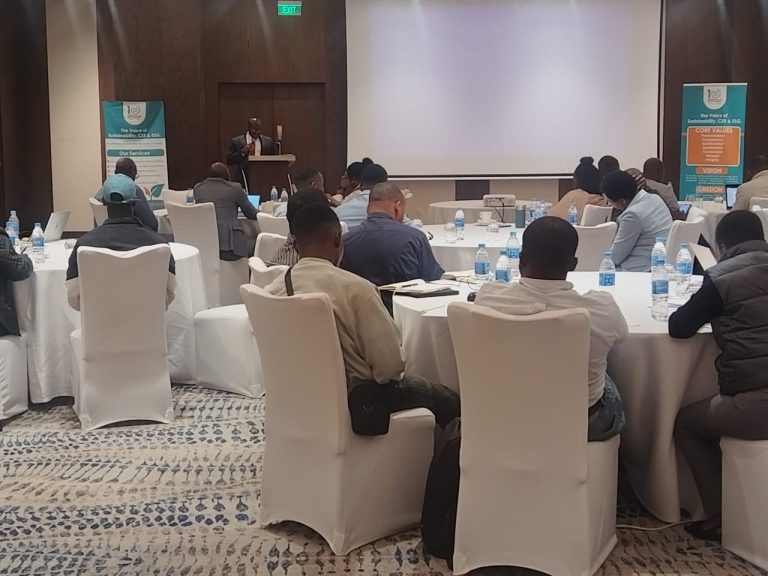


Business leaders, sustainability experts, and financial practitioners will gather in the Eastern Highlands next week for the 3rd Annual ESG Strategy Workshop Retreat, a four-day meeting aimed at helping Zimbabwean and regional companies turn environmental, social, and governance commitments into measurable business strategies.
The workshop, organised by ESG Network Zimbabwe, will run from February 25 to 28 in Vumba under the theme “Defining Your 2026 ESG Strategy: From Insights to Action, Your 2026 ESG Roadmap.”
It comes as ESG standards are increasingly shaping access to capital, regulatory compliance, and corporate reputation across global markets.
Organisers say the retreat will focus on practical frameworks, reporting standards, and sector-specific ESG performance indicators, with delegates expected from listed companies, financial institutions, advisory firms, and development-focused organisations.
The format is designed as a working strategy platform rather than a ceremonial conference, with technical sessions and case-driven discussions.
Leading the technical discussions will be Zimbabwean ESG and marketing strategist Prosper Mutswiri, who said companies are now under growing pressure to embed sustainability into core financial and operational decision- making rather than treating it as a compliance afterthought. “Across the region, ESG is moving into the centre of business strategy because investors, lenders and regulators are all asking the same questions around risk, resilience and impact,” Mutswiri said ahead of the meeting. “This workshop is about helping organisations move from broad ESG statements to bankable, measurable, and auditable plans.”
He said one of the major drivers behind the shift is the tightening of global sustainability and climate disclosure standards, which are increasingly influencing how companies report risk and long-term value.
“Disclosure frameworks linked to climate and sustainability are converging globally, and local firms that want to remain competitive must be ready,” he said. “It is no longer enough to publish a glossy sustainability report — there must be credible data, governance systems, and performance tracking behind it.”
The retreat will also explore how ESG considerations are affecting high-impact sectors such as mining, agriculture, finance, and infrastructure, where exposure to climate risk, community relations, and governance controls can materially affect valuations and funding costs.
Mutswiri said businesses must also prepare for the operational realities of climate change, including water stress, energy transition pressures, and extreme weather events.
“Physical risk is now a boardroom issue,” he said.
“Companies must plan for resource efficiency, resilience, and adaptation in ways that protect both profitability and communities.”
Other speakers featured at the retreat include Kenya-based sustainability consultant Sussy Wanjala, circular economy and ESG strategist Jos Reinhoudt, and South African ESG adviser Sudesh Pursad, who are expected to share regional and international perspectives on ESG integration and sustainable finance.
Zimbabwean experts scheduled to contribute include credit risk and governance specialist Ephraim Chawoneka, sustainability and finance professional Fidelia Gandya, ESG strategist Hazel Kwaramba, and communications and ESG advisory specialist Gloria Mkombachoto, alongside ESG Network Zimbabwe executive director Willard Razawo.
Organisers say the cross-border mix of speakers is intended to give participants both local relevance and global context, particularly as African companies increasingly interface with international investors and supply chains that require ESG alignment.
Participating partners listed for the event include major corporates and institutions drawn from finance, agriculture, telecommunications, and energy, reflecting what organisers describe as growing mainstream acceptance of ESG as a business performance issue rather than a niche sustainability topic.
Mutswiri said Zimbabwe has an opportunity to shape ESG models that are grounded in local economic realities while still meeting international expectations.
“There is strong value in developing ESG approaches that are context-aware but globally credible,” he said.
“If properly designed, ESG frameworks can support national development priorities, strengthen governance, and unlock long-term capital.”
He added that companies that integrate profitability, social impact, and environmental stewardship are more likely to build durable enterprises.
“ESG is ultimately about linking performance with purpose and governance,” Mutswiri said.
“Those who get that balance right will be better positioned for growth, funding, and stakeholder trust.”
Outcomes from the retreat are expected to include draft ESG roadmaps and implementation guides for participating organisations, with follow-up technical support planned through the year as firms refine their 2026 sustainability strategies.