

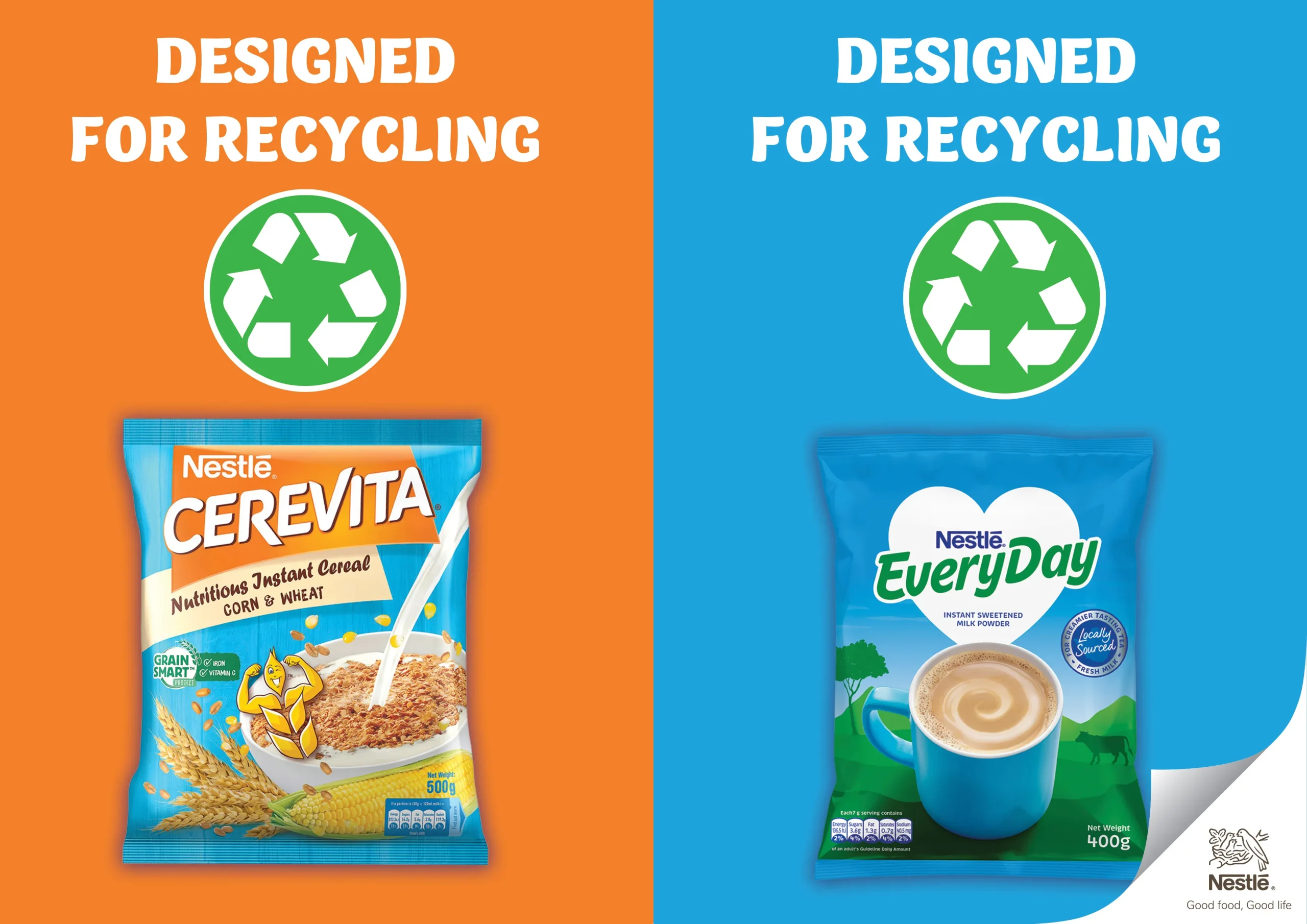
HARARE-Designing for Recycling: How CEREVITA and EVERYDAY are advancing sustainability packaging in Zimbabwe
Across Zimbabwe, families rely on trusted brands like CEREVITA and EVERYDAY every day for nourishment, affordability and quality. At Nestlé Zimbabwe, we believe that caring for families also means caring for the environment they live in. This is why we are increasingly focusing not only on what we produce, but also on how our products are packaged and managed at end of life.
Nestlé’s approach to packaging is guided by clear sustainability principles: protecting human and environmental health, enabling a circular economy, complying with national regulations where applicable, and collaborating with stakeholders to strengthen local systems. Design for Recycling is one of the practical ways these principles are being applied in Zimbabwe.
Through Design for Recycling (D4R), Nestlé is strengthening its commitment to everyday sustainability by ensuring that packaging is designed to be recyclable, simpler to recover, and better aligned with local waste-management realities without compromising food safety or quality.
What does “Design for Recycling” mean?
Design for Recycling (D4R) focuses on ensuring that packaging can be effectively collected, sorted, and recycled within existing or emerging waste‑management systems at the end of its life
This means:
- Using simpler, predominantly mono‑material packaging where feasible
- Reducing unnecessary packaging and hard‑to‑recycle materials
- Designing packaging that is compatible with local recycling infrastructure and recovery realities
- Mono‑material plastic structures (mainly PE or PP)
- Reduced use of complex laminates
- Improved recyclability through simpler designs
- Responsible use of printing, labels and inks
Nestlé’s global vision is clear: none of our packaging should end up in landfills or as litter. In Zimbabwe, this vision is being translated into practical action through everyday brands that are already part of households’ daily lives. For CEREVITA and EVERYDAY, Design for Recycling is not a distant ambition it is already being implemented in practice.
At Nestlé’s Harare factory, CEREVITA 500g packs have been transitioned to recyclable flexible packaging, enabling an estimated additional 35 tonnes of plastic to be recycled annually. This shift follows Nestlé’s Golden Rules for packaging, which prioritize:
For consumers, this means the same nutritious cereal they trust, now wrapped in packaging designed with its full life cycle in mind.
Less complexity, more value
In line with Nestlé’s Rules of Packaging Sustainability (Public Version, June 2025), packaging for everyday products is being redesigned to:
- Use fewer materials to improve recyclability and recovery efficiency
- Avoiding problematic plastics and additives that limit recycling outcomes Increase the potential value of recycled materials by keeping them clean and compatible with recycling streams
This approach makes recycling more efficient and supports the development of a stronger circular economy where materials stay in use for longer.
Partnering for systemic change
Design for Recycling cannot succeed through packaging design alone. Nestlé recognizes that recycling only works when effective systems, partnerships, and regulatory alignment are in place. Across Zimbabwe, the company is engaging with:
- Environmental regulators and authorities, including the Environmental Management Agency (EMA)
- Waste‑management community‑based recyclers and recovery initiatives and recycling organizations. These partnerships are essential to strengthen effective collection, sorting and recycling systems and to supporting policy dialogue and advancing nationally aligned approaches on sustainable packaging.
As Nestlé Zimbabwe continues its sustainability journey, it remains open to collaboration with partners who can help advance practical, locally relevant recycling solutions.
Empowering consumers through everyday sustainability
Sustainability works best when consumers are part of the journey. Through clearer packaging design and responsible communication, Nestlé aims to help households make better disposal choices, turning everyday actions into collective impact.
By designing packaging that is simpler, more recyclable and fit for purpose, CEREVITA and EVERYDAY are demonstrating that sustainability does not have to be complex. It can start with the products on our shelves, in our kitchens, and on our breakfast tables, supported by responsible design, strong partnerships, and shared accountability.
Because nourishing families today should never come at the expense of tomorrow.