
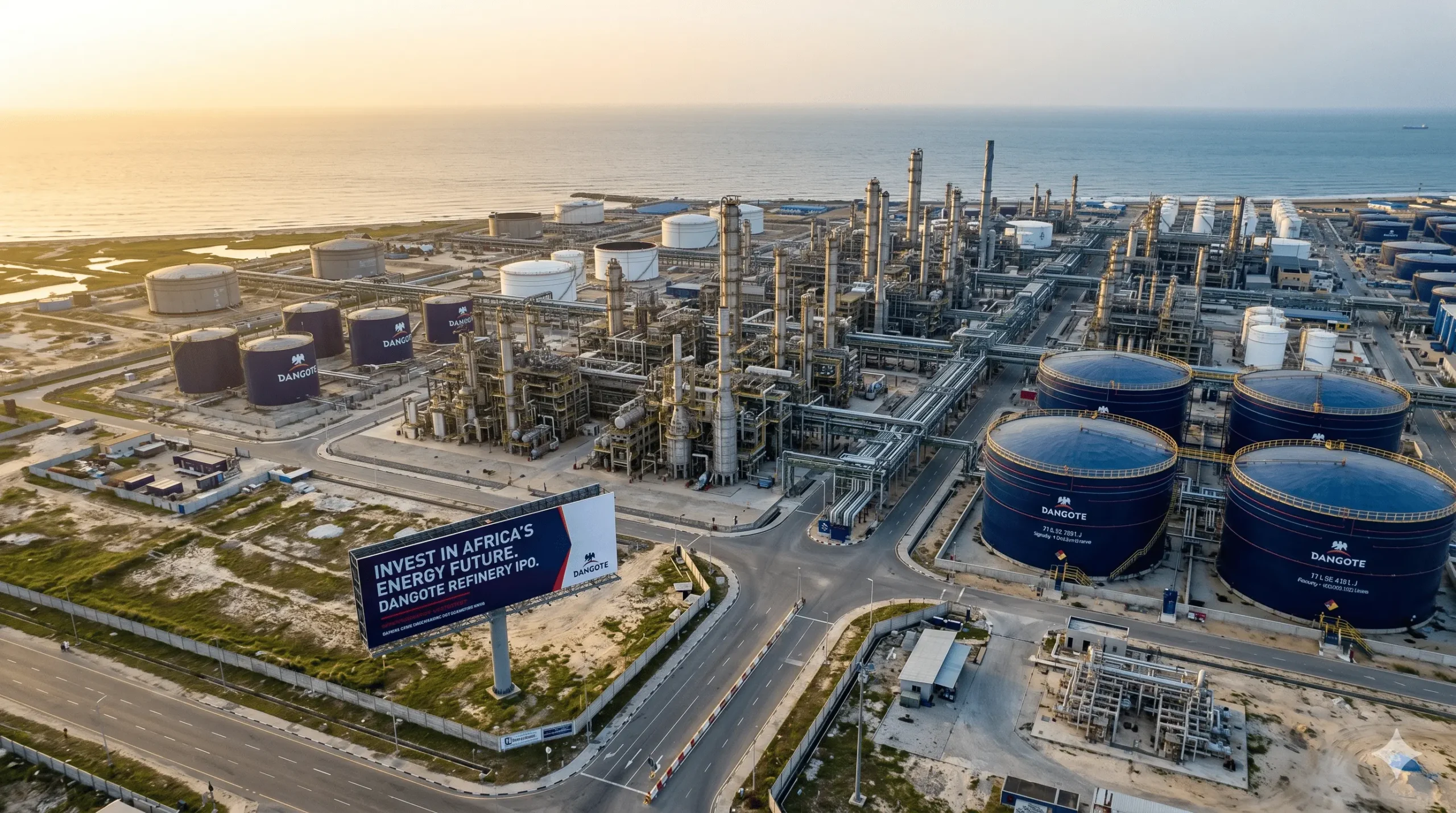
Africa’s capital markets are witnessing a landmark transaction as Dangote Petroleum Refinery and Petrochemicals FZE invites members of the public to participate in its initial public offering (IPO).
Marketed as a “people’s IPO”, the offer opened on 14 September 2026 and is scheduled to close on 13 October 2026. Approximately 4.1 billion shares are being offered at ₦525 per share, with a minimum subscription of 10 shares. The offer aims to raise approximately ₦2.15 trillion, or about US$1.6 billion.
The refinery currently has a reported processing capacity of approximately 700,000 barrels of crude oil per day, with plans for further expansion. The transaction is significant because it combines industrial development, energy security, capital-market growth and public ownership.
Why ESG matters
Refining and petrochemical operations can create environmental impacts such as greenhouse-gas emissions, air pollution, water use, effluent discharge, hazardous waste and the risk of spills.
The company’s official prospectus identifies environmental and health, safety and environmental requirements relevant to its operations. However, stakeholders will increasingly expect clear information on emissions, energy and water use, pollution controls, waste management, emergency response and environmental rehabilitation.
The prospectus also recognises that the global energy transition and the adoption of alternative fuels could affect the company’s future operating environment. This demonstrates that climate and transition risks are also business and financial risks.
The social dimension is equally important. A major industrial project must protect workers and contractors, engage surrounding communities, provide safe operations and maintain accessible grievance mechanisms. Public share ownership is valuable, but it does not replace responsible community engagement or worker protection.
Governance will also be critical. New shareholders will expect transparent reporting, strong board oversight, effective risk management and fair treatment of minority investors. Nigeria’s Securities and Exchange Commission has advised prospective investors to use only officially approved channels and to read the approved prospectus carefully.
Lessons for Zimbabwean businesses
The Dangote IPO offers important lessons for companies in Zimbabwe and across Africa:
- Growth must be matched by accountability.
- ESG risks belong in the boardroom because they can affect finance, reputation and operations.
- Transition risks should be assessed early as technology, regulation and customer expectations change.
- Social licence must be earned through meaningful engagement and responsible conduct.
- ESG claims must be supported by data, measurable targets and transparent reporting.
The Dangote Refinery IPO is therefore more than a major share offering. It is a reminder that long-term business success depends not only on financial performance, but also on how organisations manage their environmental, social and governance responsibilities.