

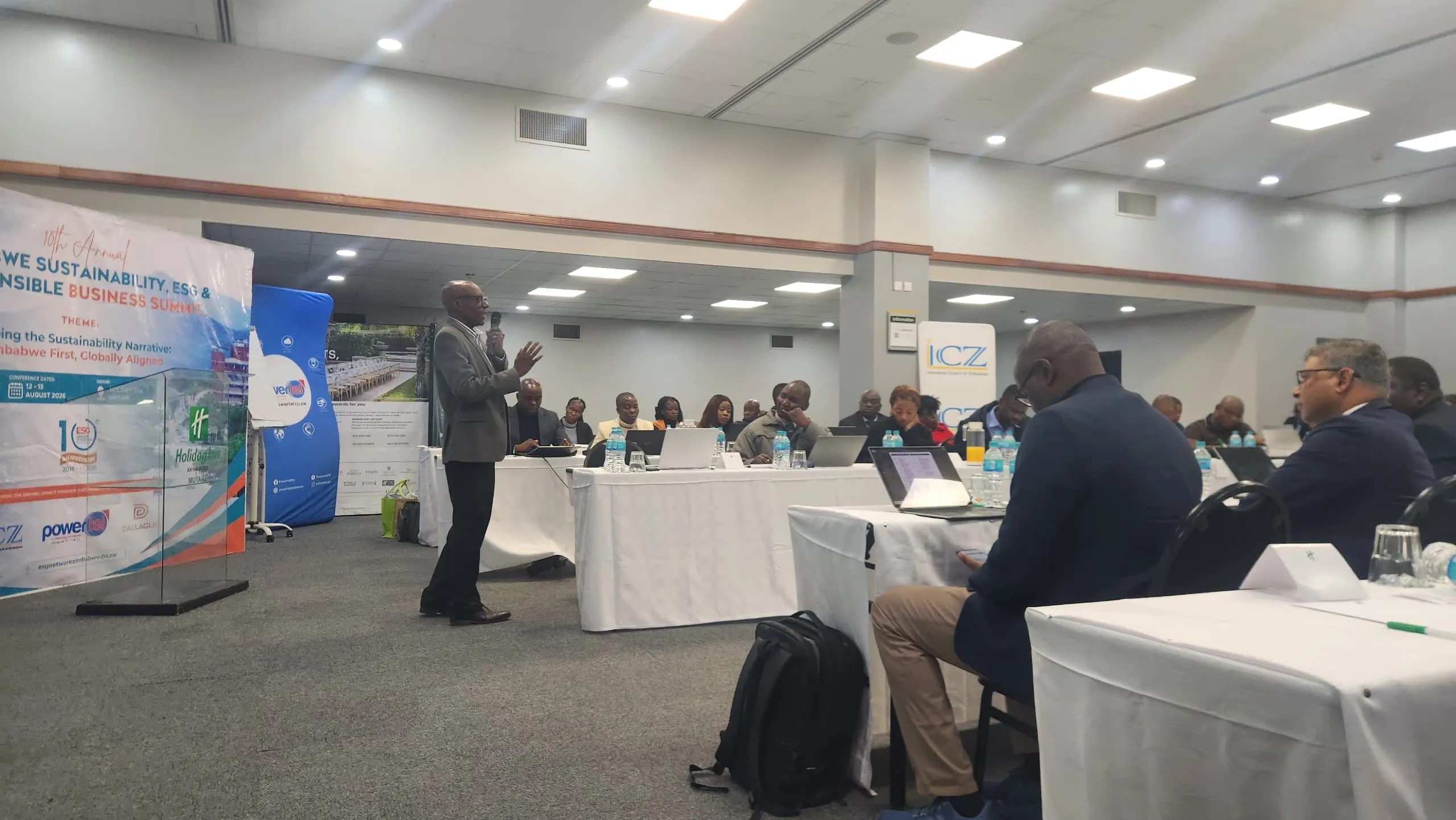
The 10th Annual Zimbabwe Sustainability, ESG and Responsible Business Summit successfully transitioned from discussion to active framework building. Under the theme “Shaping the Sustainability Narrative: Zimbabwe First, Globally Aligned,” the major takeaways centred on establishing concrete roadmaps for compliance and capital injection.
Below are the core takeaways: –
Regulatory & Framework Alignment
National Compliance Roadmap: A core resolution of the event was the commitment to formalizing a national compliance roadmap. This will actively guide public and private sector institutions to align their regular workflows with global ESG standards.

National Working Framework: Stakeholders across sectors were heavily charged to unify voices. To ensure the upcoming national sustainability guidelines are uniquely reflective of Zimbabwe’s socioeconomic context rather than just imported policies.
Sustainable & Green Finance
Unlocking Investment Channels: Alignment with Article 6 of the Paris Agreement emerged as a critical pathway for the country. Corporate ESG compliance is no longer a peripheral PR choice—it is now a strict prerequisite for attracting international investment and climate-related financing.
Green Bonds: Panels focused heavily on the structural and governance measures required by local businesses to tap into lucrative international green bond financing.
Decentralization & Regional Devolution
Community-Rooted Action: Moving the summit to Manicaland Province served to decentralize the national sustainability dialogue away from major urban boardrooms.
Leveraging Devolution: Regional leadership urged corporations to immediately align their business footprints with the government’s ongoing devolution programme. This means directly incorporating local environmental management, sustainable agriculture, and community conservation projects into their long-term models.
Innovation, Tradition & Tech
Indigenous Knowledge Systems (IKS): A unique, highly emphasized pillar was the intersection of tradition and modernity. Delegates explored integrating traditional ecological knowledge with contemporary science to execute culturally resonant, community-led climate resilience strategies.
We would like to take the opportunity to thank all our speakers for their contributions to the sustainability agenda. Their insights highlighted the complexities facing our industry.
ESG Network Zimbabwe Board Member Mr Ephraim Chawoneka said compliance was becoming an essential requirement for companies seeking investment and climate-related investments.